
What if the portraits that mean the most to young players capture both their team spirit and their own personality? Planning junior baseball club dug out portraits Adelaide clubs can organise around game day takes more than choosing a backdrop. The session needs to fit around games and club activities, while giving each player a clear moment in front of the camera.
It’s understandable to want photographs that feel personal without adding confusion or pressure to a busy club day. Festival City Photography provides sports team photography and individual sports portraits, helping clubs create imagery of players and the baseball community around them.
This guide covers the practical choices involved, from selecting portrait styles to coordinating players and explaining image options to families. Use it to set the club’s priorities and give organisers, coaches and families a clear picture of the plan.
Key Takeaways
- Plan junior baseball club dug out portraits Adelaide clubs can use to capture the character of the team as well as individual players.
- Choose the image type to suit your goal: individual sports portraits focus on each player, team photos bring players together, and composite group photos combine individual portraits.
- Set the club’s purpose, coordinate participants and choose a setting that fits around training and match schedules.
- Give families one clear message explaining the portrait purpose, image formats and ordering steps.
- Festival City Photography provides sports team photography and individual sports portraits for clubs and players across South Australia.
Why junior baseball club dugout portraits in Adelaide are different from team photos
A dugout portrait uses the club’s baseball setting as part of the image. It might feature one junior player or a small group, with the dugout and familiar details providing context. A dugout portrait is a planned individual or group photograph made in a baseball club setting, using that environment to reflect the team’s identity. The setting adds a sense of place while keeping attention on the players.
That’s different from an informal snapshot taken during a game or between activities. A planned portrait has a clear subject and composition, whether it features one player, a small group or the whole team. It sits within the broader field of Sports photography, where images can document athletes, teams and the atmosphere around a sport.
What makes a dugout portrait feel connected to the club?
Uniforms, gloves, bats and the dugout itself can help tell a team’s story. An individual portrait gives a young player a moment in focus while showing their connection to the club. A group portrait brings teammates together in a recognisable setting. The aim is to create a welcoming record of the players and the baseball community they share, rather than make every image look identical.
How dugout portraits differ from standard team photographs
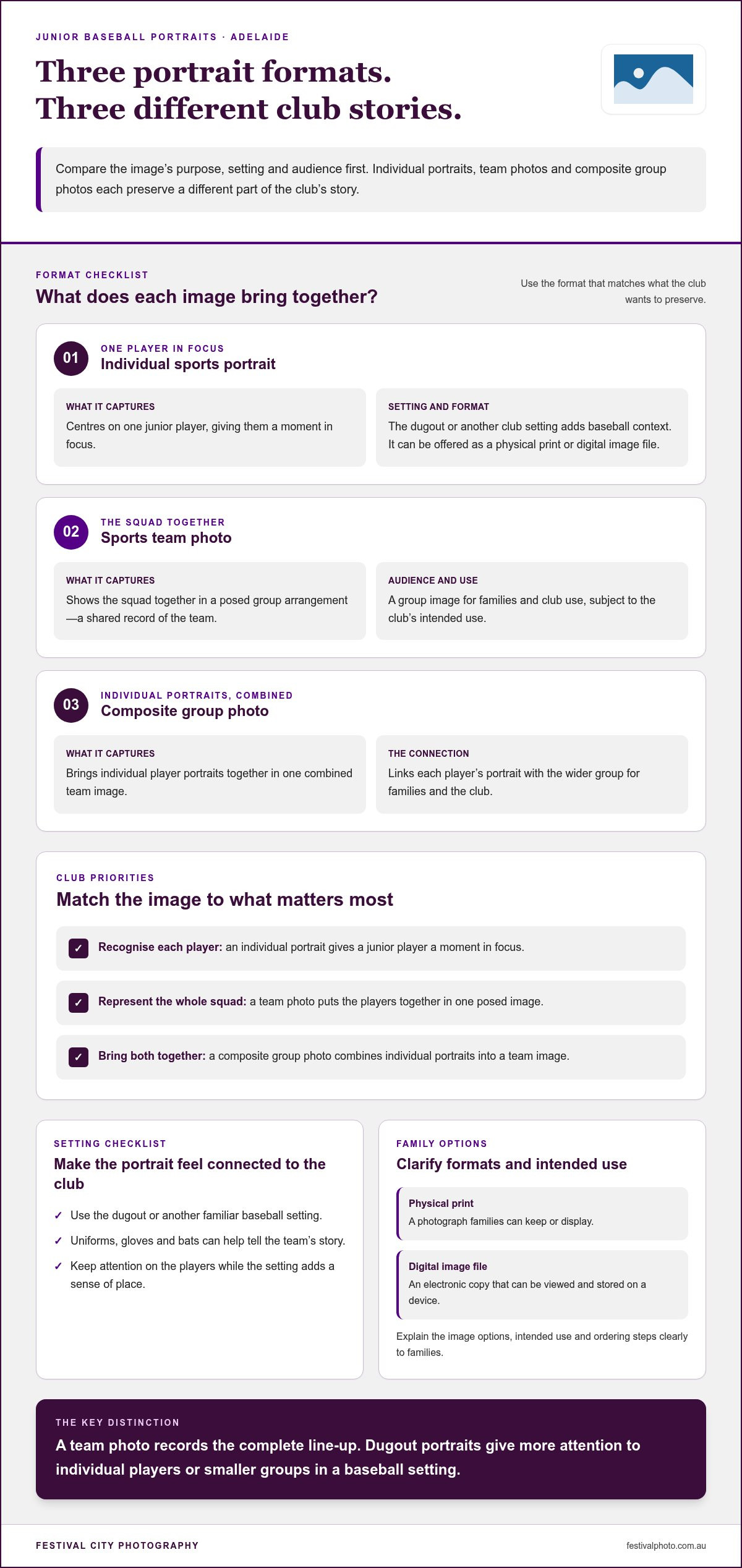
A standard team photograph usually brings the full squad together in a posed arrangement. It gives families and the club a shared record of the team. Dugout portraits can take a more focused approach, featuring individual players or smaller groups in a baseball setting. The styles can complement each other: one records the complete line-up, while the other gives more attention to individual players or smaller groups.
There are a few useful distinctions:
- Individual sports portraits: centre on one player.
- Sports team photos: gather the squad in one group image.
- Composite group photos: bring individual portraits together in a combined team image.
These formats serve different purposes, so decide what the club wants to preserve before settling on a portrait style. For a broader look at posed team photography, see the existing Sports Team Photos Adelaide guide. When planning junior baseball club dug out portraits Adelaide families can treasure, consider how the setting and format together represent the players’ place in the club.
What to compare when choosing junior baseball dugout portraits in Adelaide
Start with the purpose of the images, then compare the portrait style, setting and intended audience. This keeps the club’s priorities clear and helps families understand their options. Individual sports portraits, team photos and composite group photos each tell a different part of the club’s story, so it helps to decide which outcome matters most.
| Image type | Purpose and setting | Format and audience |
|---|---|---|
| Individual sports portrait | Focuses on one player, with the dugout or another club setting adding baseball context. | Can be offered as a physical print or digital image file for the player and family. |
| Sports team photo | Shows the squad together in a posed group arrangement, creating a shared record for the club. | A group image for families and club use, subject to the club’s intended use. |
| Composite group photo | Brings individual portraits together in one combined team image. | Connects each player’s portrait with the wider group for families and the club. |
Individual portraits, team images or a composite group photo?
Choose individual portraits when the priority is to recognise each junior player. A team photo puts the squad front and centre, while a composite group photo combines separate player portraits into one team image. Because each format has a distinct purpose, organisers can choose what best suits the club rather than assume every style needs to be included.
Ask what the club wants the finished image to do: celebrate each player, represent the whole squad, or combine individual portraits into a team image. That decision helps determine the portrait format and whether the dugout is the right setting.
Which image formats suit junior players and club families?
A physical print gives families a photograph to keep or display. A digital image file is an electronic copy that can be viewed and stored on a device. Beyond standard photo prints, digital files allow families to create bespoke memorabilia such as trading cards or plaques; learn more about Custom Sports Products to see how individual photos can be turned into keepsake items. Families may prefer different formats, so explain the options and ordering steps clearly before photo day.
Match image formats to family and club needs by explaining the print and digital options, their intended use, and how families can order. Clarify whether images are intended as personal keepsakes, club records or both. This helps avoid confusion about how photographs may be used. For junior baseball club dug out portraits Adelaide clubs can shape around their priorities, explore Festival City Photography’s sports portraits.
How to organise a smooth Adelaide junior baseball portrait session
A clear plan helps portraits fit into club life without competing with training, matches or other activities. For junior baseball club dug out portraits Adelaide organisers can arrange, first decide which images the club wants, then coordinate participants, place and family communication. Appoint one club contact to keep information consistent and give coaches, players and families a reliable person for practical questions.
What should club organisers plan before photo day?
Work through the decisions in order. This gives the committee a straightforward plan to share with the photography team and families.
- Set the goal. Decide whether the priority is individual portraits, a team image or both. This clarifies who needs to take part and what the session should capture.
- Coordinate participants. Ask coaches to consider the training and match schedule, then choose a time that fits around existing activities. Share the plan with the relevant teams early so families can prepare.
- Plan the setting. Choose a club location that suits the portraits and reflects the team’s baseball environment. Tell participants where to gather so they aren’t left guessing on the day.
- Communicate with families. Send one clear message covering the purpose, arrangements, what players should wear or bring, image options and ordering information.
Adelaide clubs have different facilities, routines and schedules. Build the plan around the team’s actual activities instead of assuming every club day runs the same way. Confirm the sequence of portraits and who will organise players between activities as part of the session plan.
How can young players feel prepared and included?
Keep instructions simple and age-appropriate. Ask families to have players arrive in their usual uniform, with any club-approved equipment relevant to the portrait. Explain the plan in a calm, positive way, and let players know they can ask their coach or the nominated contact if they’re unsure what to do.
Young athletes won’t all feel equally comfortable in front of a camera. A respectful atmosphere, patient guidance and clear expectations can help make the experience welcoming, without putting pressure on anyone to perform. Coaches can pass on instructions and help players know when it’s their turn, while the club contact keeps families updated if arrangements change.
Good organisation isn’t about making club day rigid. It gives everyone enough information to take part with confidence while keeping portraits connected to the team’s routine and community.
What families and club committees should clarify before booking
Clear expectations help the committee coordinate the session and give families confidence about what’s involved. Before booking junior baseball club dug out portraits Adelaide, agree on the purpose, participants and setting. Nominate one club contact to share updates and answer practical questions.
A practical booking checklist for club committees
Use a short checklist to align coaches, team managers and families before the session:
- Portrait goal: Decide whether the focus is individual player portraits, a team image or another format, and identify who the photographs are for.
- Participants and coordination: Confirm which teams and players will take part. Agree how coaches or team managers will organise players around existing club activities.
- Preferred setting: Select a club location that supports the portrait purpose and fits the day’s arrangements.
- Family communication: Share the session plan, what players should bring or wear, image options, ordering steps and a named contact for questions.
Sending the same information to everyone helps prevent mixed messages. If plans change, the club contact can share the update through the usual team communication channels.
How to make image choices clear for families
Describe each option in plain language. A physical print is a photograph families can keep, while a digital image file is an electronic copy. Explain the available options and give straightforward ordering instructions, including any steps families need to complete. Don’t imply that prints and files come together unless that’s part of the arrangement.
State how the images are intended to be used. Separate personal family use from club use, such as sharing a team image in club communications, and explain how families can raise questions about their child’s participation or image use. Agree on the club’s approach to permissions before the session and communicate it respectfully, without making assumptions about every family’s circumstances.
A well-prepared booking gives the photography team and club a shared understanding of the outcome, while families know what to expect and how to make their choices. Discuss junior baseball portraits with Festival City Photography to plan imagery that reflects your club and its players.
Choose Festival City Photography for junior baseball club portraits in Adelaide
Choosing a photographer for junior baseball portraits means balancing two priorities: images that reflect each player and the team, and a process that fits the club’s activities. Festival City Photography provides sports photography for teams and individual players across South Australia, creating portraits and team imagery that recognise the club setting and its community.
A local photography partner for Adelaide clubs
Festival City Photography is a second-generation, family-owned South Australian business. It provides photography for schools, sports clubs and events, including individual sports portraits and team photos. For clubs planning junior player portraits, clear coordination and an understanding of team identity help shape an organised experience.
The portrait formats suit different club needs. Individual sports portraits give each player a place in the story, while sports team photos bring the squad together. Composite group photos combine individual portraits into a shared team image. Physical prints and digital image files give families and clubs different ways to keep photographs. Choose formats according to what the club wants to record and who the images are for.
For junior baseball club dug out portraits Adelaide committees can plan with confidence, begin by choosing the outcome: individual portraits, team imagery or a combination. Then organise participants, the club setting and family communication around existing activities. Festival City Photography’s sports photography for teams and individuals supports clubs in creating imagery that represents their players.
Next steps for planning your club’s portraits
Before getting in touch, note the portrait goals, the teams or players likely to participate and the setting you have in mind. Identify the club contact who can coordinate with coaches and share information with families. These details help keep the conversation focused on the club’s needs and avoid leaving key decisions until photo day.
Families value photographs that recognise their young players, and clubs value images that reflect the community they build together. A thoughtful plan supports both, with clear choices about portrait types and image formats.
Explore Festival City Photography’s sports photography services and get in touch through the website to discuss portraits for your Adelaide club.
Plan portraits that celebrate your club
The right portrait choice depends on what your club wants to remember. Individual sports portraits give each young player a moment in focus, while team photos bring the squad together. A dugout setting can add a recognisable baseball backdrop. Planning participants, fitting the session around club activities and communicating with families helps make the experience easier to organise.
For junior baseball club dug out portraits Adelaide families can value, consider both the image style and how people want to keep it. Festival City Photography is a second-generation, family-owned South Australian business offering sports team photography and individual sports portraits, with physical prints and digital image files among its offerings.
Outline your club’s portrait goals and likely participant groups, then discuss the options with a local photography team. Explore sports photography for your Adelaide club and take the next step towards portraits that recognise your players and their baseball community.
Frequently Asked Questions
What are junior baseball dugout portraits?
Junior baseball dugout portraits are planned baseball-themed photographs of individual players or small groups in a club setting. The dugout, uniforms and equipment provide recognisable baseball context while the players remain the focus. For junior baseball club dug out portraits Adelaide clubs can plan, the format might centre on each player, a smaller group or a broader team image, depending on what the club wants to remember.
Can a baseball club combine individual portraits and team photos?
Yes. A club can plan for both individual portraits and a team photo. Individual sports portraits give each player their own image, while a team photo brings the squad together in one frame. These formats serve different purposes and can complement each other. The club can decide which players to include and share portrait and ordering information with families, without assuming both formats are part of a single package.
How should an Adelaide junior baseball club prepare for portrait day?
Start by deciding whether the club wants individual portraits, a team image or both. Coordinate participants with coaches and team managers, choose a suitable club setting, and plan around training and match schedules. Nominate one club contact to share practical details with families, including what players should wear or bring and how image choices and ordering will work. Clear communication helps everyone understand the plan before the session.
What should a club look for in a junior sports photographer?
Choose a sports photographer whose work and process suit the club’s goals. Festival City Photography provides sports team photography and individual sports portraits for clubs and players across South Australia. Organisers can consider whether the planned images suit the setting, whether individual players and the wider team are represented, and whether families will receive clear information about image options.
Can families receive digital files as well as printed baseball portraits?
Festival City Photography provides physical prints and digital image files among its offerings. A print is a tangible photograph for families to keep, while a digital file is an electronic image that can be viewed and stored on a device. Explain the formats and ordering steps clearly so families understand what they’re selecting.
How do dugout portraits differ from a standard baseball team photo?
A standard team photo usually shows the squad together in a posed group arrangement. A dugout portrait uses the baseball club setting and may feature an individual player or a smaller group, giving the image a different focus and context. Clubs may value both styles: a team photo records the squad as a whole, while individual or smaller-group portraits highlight players within their baseball community.
Are composite group photos the same as a team photo?
No. A team photo typically brings players together for one group photograph. A composite group photo combines individual portraits into a single image representing the team. This can suit a club that wants each player shown individually while also presenting the group together. The formats create different kinds of records, so committees can choose according to the image’s purpose and how players and families will use it.