
A junior team portrait can capture the energy of the oval or give every player a clean, consistent grey-screen background. For junior Australian rules football club team portraits in Adelaide, pitch-side photos place the team in its football setting, while grey-screen portraits create a simple, unified look.
Both styles can preserve a record of the season. The right choice depends on the look the club wants and how photo day fits around training and other activities. It also helps to plan how players will be photographed and how families can order images.
This guide compares pitch-side and grey-screen portraits, then explains how to plan photo day and order images. You’ll get a clearer picture of the process, from choosing a style to arranging portraits for players and families.
Key Takeaways
- Compare pitch-side images with grey-screen portraits to choose a look that suits your club and the story you want the season’s photos to tell.
- Make photo-day planning easier by organising team details, booking arrangements and package ordering before the day.
- Think through the space and practical setup needed for team photos so players can move smoothly between activities and portraits.
- Coordinate portrait timing with the club calendar, team availability and the flow of the season.
- Plan consent and responsible image use as part of preparing for junior team photography.
Which Adelaide photographers offer junior Australian rules football team portraits?
For junior Australian rules football club team portraits in Adelaide, choose a photographer experienced in school and club sports photography. Consider how team groups and individual players will be photographed, and whether the style fits your club. Festival City Photography provides Sports Team Photos and Individual Sports Portraits, with a professional approach to club photography.
Pitch-side photography
A pitch-side portrait places players on or beside the football ground, making the club setting part of the image. The background might include the oval, goalposts or team colours. When choosing this style, consider the available light and any activity around the photo area. A carefully chosen position keeps the team prominent while connecting the portrait to its home ground.
Grey-screen portraits
A grey-screen portrait uses a plain grey background for a consistent, uncluttered look. It can suit clubs that want a uniform backdrop across individual portraits and team groupings. Consider how lighting, framing and the players’ jumpers work against the neutral background. With fewer distractions, attention stays on the players rather than equipment or oval activity.
Photographers can differ in how they organise teams and individual portraits, so consider the club’s age groups and preferred image style together. The AFL recommends single-age junior football groups where possible, with two-year age spans as the second option, using ages 8, 10, 12, 14, 16 and 18. Matching portrait groupings to the club’s existing teams helps keep the photo schedule and team records clear.
Start by deciding whether outdoor or grey-screen portraits better suit the club. Then plan for both team photographs and individual player portraits, and agree how teams will move through the session. A clear sequence, from gathering each team to players taking their turns, helps the photography fit around training, matches and other club activities.
A club wanting an oval-side team image may prefer a pitch-side portrait that shows its home ground. A club seeking a consistent look across age groups may favour grey-screen portraits. The choice comes down to the setting, the style and the images families want to keep. Festival City Photography’s Sports Team Photos and Individual Sports Portraits can cover both the squad and its players.
How do junior football clubs in Adelaide book team portrait photography?
A booking contact is the club representative who coordinates the photography arrangements. Choose one person to gather team details, communicate the preferred photo style and keep families informed. For example, a committee member can collect team names from coaches and send one organised update to parents. A single contact helps keep decisions and messages together.
A package is the set of portrait options presented to families for ordering. Before booking, decide whether the priority is a team image, individual player portraits or both. Ask how families view the available options, place orders and receive their finished photographs. These details shape the information you need to share, without requiring the club to select a particular family’s purchase.
A photo schedule is the order and timing of teams attending their portraits. Build it around training or match commitments, and give each coach a clear arrival time. If teams have different age groups, list them separately so players and families know where to gather. A schedule should also identify who will guide each team from its meeting point to the portrait area.
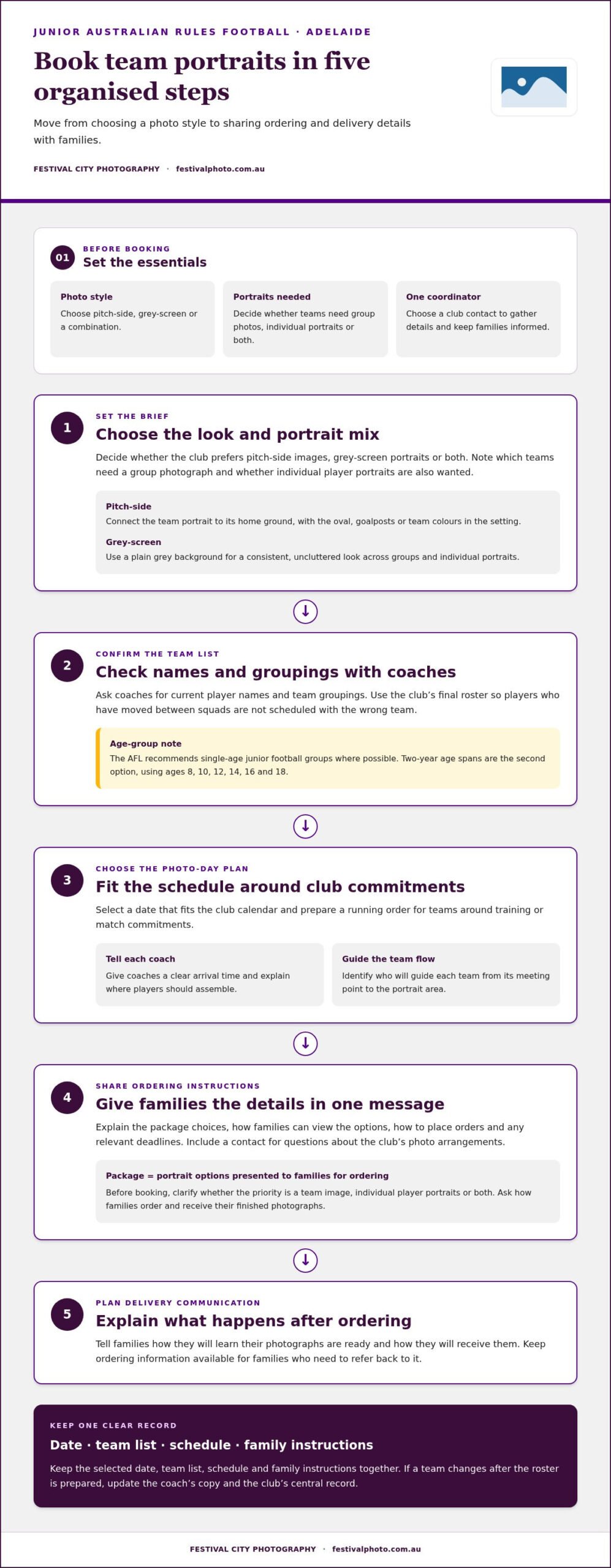
Use this booking sequence to keep the club’s decisions organised:
- Set the brief. Decide whether the club prefers pitch-side images, grey-screen portraits or a combination. Note which teams need group photographs and whether individual portraits are also wanted.
- Confirm the team list. Ask coaches to provide current player names and team groupings. Use the club’s final roster to avoid scheduling players who have moved between squads.
- Choose the photo-day plan. Select a date that fits the club calendar, then prepare a running order for teams. Tell coaches how players should arrive and where they should assemble.
- Share ordering instructions. Give families the package choices, ordering method and relevant deadlines in one message. Include a contact for questions about the club’s photo arrangements.
- Plan delivery communication. Explain how families will learn that their photographs are ready and how they will receive them. Keep the ordering information available for families who need to refer back to it.
Keep the selected date, team list, schedule and family instructions together in one record. If a team changes after the roster is prepared, update the coach’s copy and the club’s central record. This helps avoid confusion on photo day and ensures players are grouped with the right team.
Once the club has settled its schedule and ordering approach, team portrait photography can be arranged around the club’s needs.
Adelaide soccer clubs commonly schedule photo day a few weeks into the season, after teams are graded and squads confirmed. Schedules can call two or three teams at a time, allowing turns for photos and portraits.
What equipment or space does a club need to provide for team portrait day?
A portrait space is the clear area set aside for the photographer and team. The club’s main task is to choose an accessible spot and keep it free during the scheduled session. For example, move training bags, drink bottles and spare footballs away from the team’s standing area. A clear space helps players assemble without distractions and gives the photographer room to frame the group.
For a pitch-side portrait, choose an outdoor position that includes the oval or club setting but stays clear of active play and equipment. Check the background from the direction the team will face, including fences, sheds and goalposts. If training is underway, use a quieter edge where teams can gather without crossing the playing area.
A grey-screen setup is a portrait arrangement using a plain grey background. The club should identify an indoor area or sheltered space where the photographer can set up without interrupting other activities. Keep a clear route between the waiting area and portrait space. A corridor with players passing through can disrupt the session, while a nearby room or separated section gives each team a calmer place to wait.
Photographic equipment is the camera, lighting and background gear used to make the portraits. The club should agree the setup with the photographer rather than sourcing specialist gear independently. Its practical contribution is venue access and a suitable working area. If the chosen room has limited access or furniture that cannot be moved, share that detail during planning so the setup can suit the space.
Set aside a staging area near the portrait space but outside the photographer’s working area. Coaches can use the team list to check who is present and organise players in their jumpers before the session. For outdoor portraits, keep bags away from the frame. For grey-screen portraits, avoid crowding the background or entry point.
Before photo day, review these practical details with the venue coordinator:
- Access: identify the gate, room or oval entrance the photographer will use.
- Space: clear furniture or equipment from the selected portrait area.
- Power: note nearby outlets if the planned setup requires access to them.
- Weather plan: nominate an indoor alternative for an outdoor session affected by conditions.
- Player flow: keep the waiting area and exit path separate from the portrait space.
A brief venue check can reveal issues before teams arrive. A locked room, wet ground or obstructed entrance may affect the setup. Confirm who can open the space and show the photographer where it is, then tell coaches where players should wait.
When are junior Australian rules football team portraits usually taken in Adelaide
Choose a photo date when teams can gather and the required venue is available. Set it once team lists, training schedules and oval access are clear. If squads are still changing, wait until coaches know which players belong in each group. This helps avoid photographing an outdated line-up.
Decide whether an early- or later-season session best suits the club. An early session can record new team combinations and jumpers; a later one may suit settled rosters or a particular stage of the season. Consider team availability, the club calendar and whether portraits will be pitch-side or indoors.
Roster confirmation is the step of checking each team’s player list before setting the date. Ask coaches to finalise their lists before the organiser prepares the running order. If players are still moving between squads, the club may need to update its schedule. For example, a team change affects both the group image and the order in which players arrive for individual portraits.
Work around the football calendar, not just the photographer’s preferred date. Compare training nights, match commitments, school activities and club events. Pitch-side portraits require access to the oval and a suitable background, while grey-screen portraits need an available indoor space. The location can affect which date works best.
Player workload is another scheduling consideration for older juniors. The AFL recommends monitoring a player’s games across football levels and segments once the player reaches Under 14. A club can apply that principle practically by avoiding a portrait session that adds pressure to an already busy training or match schedule. Choose a time when players can attend without rushing between football commitments.
Use this sequence to settle the timing:
- Check team readiness: confirm that coaches have current player lists and groupings.
- Review club commitments: compare training, matches and other scheduled activities.
- Choose the setting: match the preferred pitch-side or grey-screen style to the venue available.
- Allow for conditions: select a workable alternative if an outdoor session can’t proceed as planned.
- Tell families: share the date, arrival instructions and any preparation details through the club’s usual communication channels.
If teams train on different evenings, organise portraits around those existing gatherings to reduce extra travel for families. For an oval-side session, make sure the club setting is available before announcing the date. Choose a time that works for the players, venue and preferred portrait style.
What consent and child-safety rules apply to photographing junior football teams in South Australia
For a junior club photo day in Adelaide, distinguish permission to take portraits from permission to share images publicly. A family may be comfortable with a team photograph for private ordering but not with the same image appearing on a public club page.
Before the session, explain where photographs may appear, such as family orders, club records or public promotion. Make the choices clear and record each family’s response. Permission for one use does not automatically mean permission for every use.
Plan practical steps to protect young players during the session. Give the photographer and club contact clear roles, and keep players within the club’s supervised area. A coach can bring the team to the portrait space and return them to the group afterwards. Avoid arrangements that leave a child alone with an adult away from the team.
Use a clear consent process before preparing team lists for the photographer:
- Tell families what will happen. Explain the photo types, ordering process and planned image uses before photo day.
- Collect responses privately. Give families a direct way to record their preferences rather than asking children to report them in front of teammates.
- Prepare a restricted list. Share relevant image-use preferences only with the people coordinating the session.
- Brief the photographer and coaches. Make sure they understand which images are for group or family use and which must not be shared publicly.
- Review before publication. Check the intended audience and use against the recorded permissions before posting or distributing images.
Handle each child’s identity and image carefully. Avoid pairing a public photograph with unnecessary personal details, such as a full name, school information or regular training location. A team image in a private family ordering process reaches a different audience from a public social post. Explain this distinction before collecting permissions.
Keep children under appropriate adult supervision throughout photography. Use a visible club area, follow the team’s usual supervision arrangements and direct questions to the named club contact. If a player doesn’t want an individual portrait, don’t pressure them. Refer the concern to their parent or caregiver and follow the club’s agreed process.
For a junior club session, organise team portrait photography with consent, supervision and image-use preferences included in the plan.
Festival City Photography: Sibling Photos
Festival City Photography offers Sibling Photos for families who want to capture brothers and sisters together. If siblings play in the same club, families can also consider how individual portraits and team photographs preserve each child’s place in the season. Sports Team Photos focus on the squad, while Individual Portraits give each player their own image.
These options can form part of a planned team portrait day. Families can choose images that reflect the shared team experience, sibling connections or both. The right selection depends on what they want to remember and keep.
To discuss photography for your club or family, visit Festival City Photography.
Make this season’s portraits part of the club story
A team photograph can become a lasting marker of the season. Thoughtful junior Australian rules football club team portraits in Adelaide can preserve the shared experience while giving families a way to remember each player’s part in it.
Festival City Photography offers Sibling Photos, Individual Portraits and Class Group Photos alongside its photography work. These options can suit families who want to remember siblings playing together or keep a portrait beyond the team image. The club can make its photo-day plans with those different family perspectives in mind.
Consider what the portraits will mean to players and families after the season ends. A clear plan can turn a busy club day into a meaningful record of the people who made the season special.
Contact Festival City Photography to discuss photography for your club. Here’s to a season worth remembering.
Frequently Asked Questions
What is included in junior footy club team portrait packages in Adelaide?
Packages can offer different combinations of team photographs, individual portraits and image formats. Separate the team image from each player’s portrait when comparing what families can order. Festival City Photography offers Sports Team Photos, Individual Sports Portraits and Digital Image Files, alongside physical prints. The available selection determines what families receive, so club organisers should make the package choices and ordering instructions clear before photo day.
How much do team portraits cost for Adelaide junior football clubs?
The cost depends on the package and image options selected, and is provided after a quote request. A club can make its request more useful by outlining whether it wants team photographs, individual portraits, printed images or digital files. These choices affect the scope of the photography order. Avoid treating a general image-package price as a club team quote, since the products and order may differ.
How do Adelaide team portrait photographers compare on price, package options, and turnaround time?
Compare the quoted cost, the images and formats each package includes, and the stated delivery timeframe. A low headline price may describe a different selection from a package with team and individual images, so compare like with like. Also note whether families order prints, digital files or both. For turnaround, use the timeframe stated for the specific team photography service, not an unrelated school-photo ordering process.